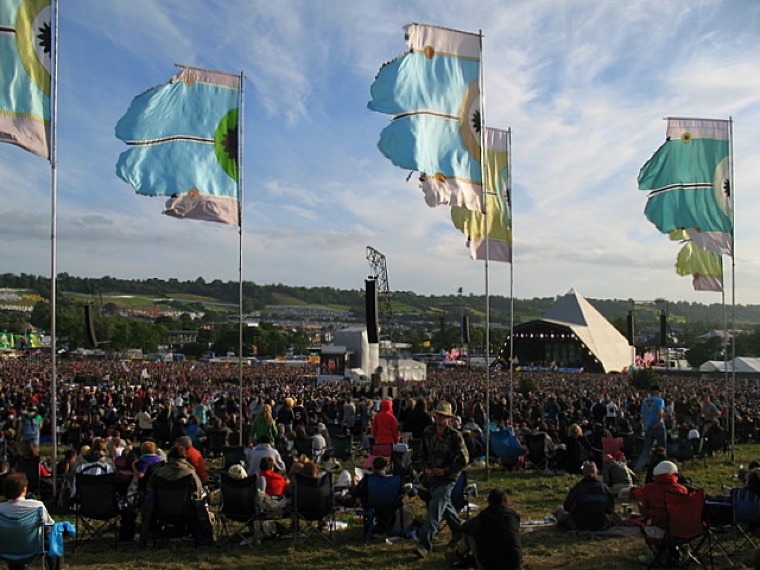
A good festival packing list has five parts: shelter and sleep, clothing for two kinds of weather, a small day bag that clears security, a way to keep a phone charged, and the sun, rain and health items that stop a small problem becoming a wasted day. Everything else is optional, and most of what first-timers pack falls into that last category.
This guide works through each part in turn, gives the official limits from the festivals and authorities that set them, and separates those rules from what we have learned across years of attending, reviewing and cataloguing festivals for the Find a Festival directory. The downloadable checklist at the end is the same list, in printable form.
What should be on a festival packing list?
Start with the festival, not the shop. A three-day camping festival in a Somerset field, a single afternoon in a Munich beer tent and a week of street processions in Oaxaca each need a different bag, and the most common packing mistake we see is people packing for "a festival" in general. Read the event's own information page first, note the dates and the site type, and check the Find a Festival calendar for what else is happening around it if you are travelling.
The second principle is that you will carry everything you pack, usually further than you expect. At large camping festivals the walk from the car park or the shuttle drop to a pitch can be a kilometre or more over uneven ground, in our experience, and at city festivals you will carry the day bag for eight to twelve hours. Weigh the packed bag before you leave, and if you cannot comfortably walk a kilometre with it, take something out.
The third is that festivals now publish what they do not want on site, and security enforces it. The rest of this festival packing list follows that order: what is banned, then what you need to sleep, wear, carry, charge and stay well, then what to leave at home.
What does the festival itself tell you not to bring?
The organiser's prohibited items page overrides any packing list, including this one. Glastonbury's 2025 pre-festival notice is direct: "Do not bring anything made of glass. All glass will be confiscated if found." The same notice asks people not to bring gazebos, because "they take up valuable tent space in the campsites", to avoid single-use items, and to "only bring things which you can take home – that includes everything, even your tent." It also warns that wipes, "even biodegradable wipes", break down into microplastics and asks people to leave them at home. The full text is on the Glastonbury Festival website.
Oktoberfest publishes size limits rather than a list of what to pack. Its 2026 security page states that bags may be up to three litres in volume or no larger than 20 cm by 15 cm by 10 cm, that glass bottles are not allowed, and that spray cans with harmful contents and anything usable as a cutting, thrusting or stabbing weapon "must stay outside". Umbrellas, walking aids and medical devices are permitted. The current rules are on the Oktoberfest security page, and our Oktoberfest listing links to them.
Between those two examples sit almost every other festival's rules. Glass and gazebos are banned at most camping events we have reviewed, bag-size limits are increasingly common at city and stadium events, and drones, flares and professional cameras are usually listed separately. Check the page in the week before you travel rather than months ahead, because these pages are updated as the event approaches.
What do you need to sleep at a camping festival?
Shelter is the one place where cheap gear costs you. A tent one size larger than the number of people sleeping in it, with a full flysheet and a sewn-in groundsheet, is the difference between a wet weekend and a dry one, and in our experience the pop-up tents sold at supermarket checkouts fail in the first sustained wind or rain. Take the tent out of its bag and pitch it at home once before you go, because the most common camping-festival problem we see on the Thursday is a tent with a missing pole or pegs.
Underneath you, a sleeping mat matters more than the sleeping bag. Ground in a June field is cold and hard by 3 am, and a foam or inflatable mat is what keeps that cold away from you. Choose a sleeping bag rated a few degrees below the forecast overnight minimum, and add a small pillow or a stuff sack filled with clothes.
The small items are the ones people forget. A head torch keeps both hands free for tent zips and portable toilets. Earplugs are for the campsite, not the stages, because a sound system four fields away is quieter than a neighbour's tent at 5 am. A roll of toilet paper in a sealed bag, a hand sanitiser and a bin bag for rubbish and wet clothes round out the sleep kit.
What should you wear, and how many changes do you need?
Pack for the two weathers the site can produce, not the one in the forecast. A summer festival in Britain, Belgium or Germany can be 28 degrees at 2 pm and 9 degrees at 2 am on the same day, and the reliable answer is layers: a base layer, a warm mid layer, a waterproof shell with a hood, and a change of socks for each day plus one. In our experience a spare pair of dry socks changes a bad day more than any other single item on this list.
Footwear depends on the ground. For a field festival, wellington boots or waterproof walking boots are the safe choice, and trainers are the gamble that pays off only if it stays dry. For a city festival or a beer-hall event, comfortable shoes you have already walked in for a full day matter more than waterproofing. Break new footwear in before the festival, not during it.
For outfits, three or four changes across a five-day camping festival is normal and enough. Nobody needs a clean outfit for each day; a wash bag with a flannel and a travel towel does more for how you feel than a fresh shirt. If the festival has a costume tradition, as many of the events in our music category do, add that on top rather than instead of the practical layers.
How do you keep a phone charged for four days?
A power bank is essential and now heavily regulated if you are flying. The International Air Transport Association's guidance to airlines, effective 27 March 2026, states that power banks must be carried as carry-on baggage, "must not be recharged while onboard the aircraft", should not be used to charge a device in flight, and are limited to two per person. The IATA guidance document sets the capacity ceiling for personal use at 100 Wh, and airlines apply their own versions, so check your carrier's dangerous goods page before you buy a large unit.
For a camping festival, a 20,000 mAh power bank, which sits at roughly 74 Wh and under the 100 Wh line, will recharge most phones three to four times in our experience, which is enough for a long weekend if you keep the screen brightness down and turn off the search for signal in areas with none. Pack the charging cable and a short second cable, because cables are the item most often lost in a tent.
Many larger festivals now offer charging lockers or charging tents for a fee, and some campsites have solar charging points. These queue badly at peak times, so treat them as a backup rather than a plan. Write the essential contacts and your meeting point on paper in case the phone dies anyway.
What goes in the day bag?
The day bag is the bag you actually live out of, and it should be small. Where a festival sets a limit, that limit decides the bag: Oktoberfest's three-litre rule rules out almost every backpack, and a small crossbody or bum bag is the standard answer. Where there is no stated limit, a bag of 10 to 20 litres is still the right size, because anything larger becomes a burden in a crowd and slows you at the search.
Inside it goes a refillable water bottle, which most large festivals now expect. Glastonbury asks for "a reusable water bottle, to fill up from the free taps on site" and has not sold single-use plastic bottles since 2019. Add sunscreen, a light waterproof, a small amount of cash for the stalls that lose card connection, your ticket or wristband, ID, a portable phone charger, lip balm, tissues and any medication you need during the day.
Two habits make the day bag work. Pack it the night before, so the morning is only a question of clothing. And keep valuables in an internal zipped pocket rather than the outside pocket, because in our experience festival pickpockets work the outside pockets of crowded bags, and they are most active at the moment a headline act starts.
What sun, rain and health items belong on every festival packing list?
Sunscreen is the item most often under-packed. Cancer Council Australia recommends an SPF 50 or SPF 50+, broad-spectrum, water-resistant sunscreen whenever the UV level is 3 or above, applied 20 minutes before going outside and reapplied every two hours when outdoors, with about seven teaspoons for a full adult body application. The Cancer Council guidance also notes that sunscreen "should always be the last line of defence" after clothing, a hat, shade and sunglasses. A festival is eight hours of open ground, so a 200 ml bottle per person for a weekend is a realistic quantity rather than an excessive one.
For rain, a poncho or a waterproof shell in the day bag is enough for the person, and a tarp or the tent's own porch is enough for the gear. The item people forget is a way to sit down when the ground is wet, which is where a folding foam sit-mat or a small groundsheet earns its space.
The health kit is small and specific. Plasters for blisters, painkillers, antihistamines, rehydration sachets, any prescription medication in its original packaging, and a copy of the prescription if you are crossing a border. Add earplugs for the stages if you are close to the speakers, and a printed card with an emergency contact and any allergies.
What changes when you fly to a festival abroad?
Three things change. Liquids in hand luggage are limited to containers of 100 ml at most airports, in a single transparent resealable bag of no more than one litre, although UK Government hand luggage guidance notes that some airports now allow containers up to two litres and that the rules "depend on the airport" you fly from and through. Sunscreen and toiletries therefore go in checked luggage or get bought on arrival.
Power banks, as above, go in the cabin and never in the hold, and the same applies to spare batteries for cameras. Camping gas, lighter fluid and aerosol deodorant are the items most commonly pulled from checked bags in our experience, so buy fuel at the destination rather than packing it.
The third change is weight. If the festival is a camping event abroad, the honest question is whether to fly with a tent or hire one. Pre-pitched tents and campsite hire at events such as Fuji Rock in Japan or the larger European festivals cost more than the equivalent supermarket tent, but you do not carry the tent across an airport, and you do not leave it in a field, which Glastonbury and most European festivals now explicitly ask you not to do. Our Japan country page and Germany country page list the events where this decision comes up most often.
What do experienced festival-goers leave at home?
The pattern we see is that first-timers over-pack clothing and under-pack sleep. Leave the second pair of jeans, the fifth outfit and the hair dryer, and take the sleeping mat and the spare socks. Leave the glass bottles and the gazebo because security will, and leave the wet wipes because the site asks you to.
Leave the full-size toiletries and take travel sizes decanted at home. Leave the laptop and the expensive camera unless photography is the reason you are going, because a tent is not a safe place for either. Leave jewellery you would mind losing.
Finally, leave the assumption that you can buy anything on site. Festival shops exist and sell sunscreen, ponchos and phone cables at two to three times the high-street price in our experience, and they sell out of exactly the item you need on the day you need it. The packing list exists so that the shop is a convenience rather than a rescue.
Pack for the festival, not for the trip
Every item on this festival packing list earns its place in one of two ways: the organiser or an authority has set a rule about it, or years of standing in fields and beer halls have shown it to be the thing people wish they had brought. The rules are quotable and linked above; the rest is experience, and you should weigh it against your own. The one instruction that holds for every event in the Find a Festival directory is to read the organiser's own page in the week before you go, because that page decides what gets through the gate.
Download the Festival Packing Checklist. It is a one-page printable version of this list, split into camping, day-bag and travel sections with the official limits noted, and it is free from the Find a Festival downloads page. Browse the festival calendar to find the event it is for.