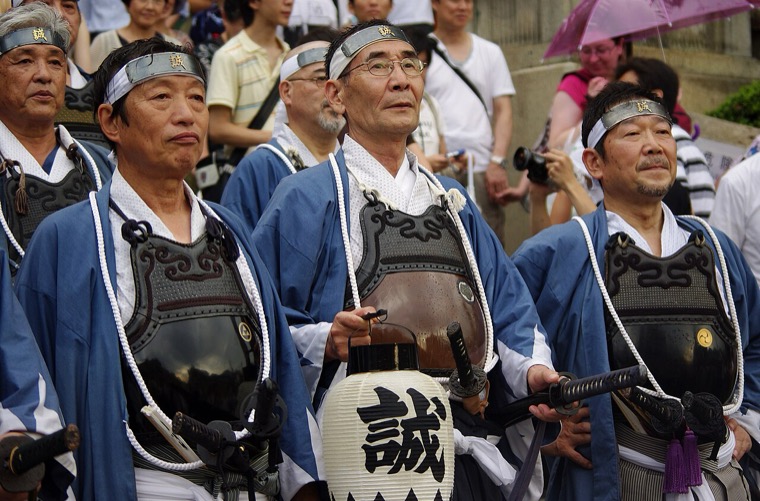
The best festivals in Japan cluster in two windows: the summer matsuri season from mid-July to mid-August, when Kyoto's Gion Matsuri, Osaka's Tenjin Matsuri, Aomori's Nebuta and Tokushima's Awa Odori follow each other within four weeks, and a shorter run from February to May that takes in the Sapporo Snow Festival, cherry blossom, Takayama's spring festival and Tokyo's shrine festivals. Fuji Rock in late July and Summer Sonic in mid-August sit inside the summer window, so one three-week trip can cover a music festival and three or four of the great matsuri.
This guide is organised by season and gives, for each event, the dates, what happens on the day, how crowded it gets, whether tickets exist and which shinkansen line or JR pass gets you there. We have attended, reviewed and catalogued the events below for the Find a Festival Japan directory, and the dates and prices come from the organisers' own pages, linked in the text.
Which festivals in Japan should you plan a trip around?
A matsuri is a shrine or temple festival, and the big ones share a shape: a few days of evening street parties, then one or two set-piece processions of floats or portable shrines called mikoshi. The procession has the fixed date and the published route, and it is the part to plan around, though the evenings before it are usually the better experience in our view, because the floats are lit and the crowds are spread across a district rather than packed along a kerb. Almost none of these events sell an entry ticket; what they sell, where they sell anything, is a reserved grandstand seat along the route, on sale two to three months ahead. The music festivals are the exception and work like festivals anywhere, with a ticket, a campsite and a lineup.
What happens at the winter festivals in Japan?
The Sapporo Snow Festival, or Yuki Matsuri, is the one winter event with international scale. It runs for eight days in early February across three sites, and the organiser has already fixed the 77th edition for 4 to 11 February 2027 at the Odori, Susukino and Tsudome sites. Odori Park in the centre of Sapporo is where the large snow sculptures stand, some the size of a building, with projection mapping after dark; Susukino has the ice sculptures among the bars, and Tsudome is the family site with snow slides. Admission to all three is free.
It is crowded in the way a city is crowded rather than the way a stadium is. Odori Park is a 1.5 km strip and you walk it, so the crush is manageable except at the projection shows, and the real constraint is accommodation, which in our experience needs to be booked by the previous autumn. Sapporo is reached from Tokyo on the Tohoku and Hokkaido Shinkansen to Shin-Hakodate-Hokuto and then the Hokuto limited express, roughly eight hours and covered by the nationwide pass; most visitors fly to New Chitose instead.
February also holds the hadaka matsuri, the so-called naked festivals, of which the largest is the Saidaiji Eyo at Saidaiji Kannon-in temple in Okayama on the third Saturday of the month, when thousands of men in loincloths compete at night for a pair of sacred sticks thrown into the crowd by a priest. We list it in the cultural category with a caution: it is a religious rite with a serious injury record, spectator space near the temple is limited and ticketed, and it is not an event to join on a whim. Okayama is on the Tokaido-Sanyo Shinkansen, about three and a half hours from Tokyo.
When is cherry blossom season, and is hanami a festival?
Hanami is not a festival in the sense used elsewhere in this guide. There is no organiser, no date and no programme; it is the national habit of eating and drinking under the cherry trees for the week or so that they are in full bloom. The long-run averages put the first blossoms in Tokyo around 24 March with full bloom around 31 March, and Kyoto and Osaka three or four days behind, but in 2026 Tokyo opened on 27 March and reached full bloom on 7 April, and Kyoto ran from 28 March to 6 April.
So you cannot book a hanami trip to the day. Book a window of ten days that straddles the average, follow the forecasts from February, and be prepared to move north or south by shinkansen to chase the front. Ueno Park in Tokyo, Maruyama Park in Kyoto and the Osaka Castle grounds are the classic sites, all free, and in our experience this is the most expensive fortnight of the year for Kyoto hotels, by a wider margin than Gion Matsuri week.
What are the spring festivals in Japan worth travelling for?
Takayama's spring festival, the Sanno Matsuri, falls on 14 and 15 April every year in the old merchant town of Takayama in Gifu Prefecture. Around a dozen tall yatai floats, lacquered and gilded and several carrying karakuri mechanical puppets, are paraded through the preserved streets, with puppet performances in the late morning and early afternoon and a lantern-lit night procession on the first evening. A town of under 90,000 receives tens of thousands of visitors for the two days, so it feels full, and the night procession is the one part worth positioning for early.
Takayama is reached on the Hida limited express from Nagoya, hourly and about two hours twenty minutes, and Nagoya is on the Tokaido Shinkansen; the nationwide pass covers the whole journey and the JR Central Takayama-Hokuriku Area pass is the regional alternative. Hotels in the town sell out months ahead, and many visitors stay in Nagoya or Gero and come in for the day.
The first Sunday of April brings the Kanamara Matsuri at Kanayama Shrine in Kawasaki, a fertility festival in which three phallic mikoshi are carried through the streets near Kawasaki-Daishi station. It has become an international curiosity and the crowd now overwhelms the site, so treat it as a two-hour stop from Tokyo on the Keikyu line, which JR passes do not cover, rather than a reason to travel.
May belongs to Tokyo's two great shrine festivals. The Sanja Matsuri at Asakusa Shrine is held on the third weekend of May, and in 2026 ran from 15 to 17 May, with a costumed procession on the Friday, the neighbourhood mikoshi paraded around Sensoji temple on the Saturday, and the three main shrine mikoshi carried out from before dawn on the Sunday until about 9 pm. The Kanda Matsuri at Kanda Myojin is the older and grander of the pair but is only held in full in odd-numbered years, so the next is May 2027. Neither sells tickets or seats, and both are as crowded as anything in this guide, with the Sanja Sunday drawing well over a million people into a district of narrow streets.
What happens at Gion Matsuri in Kyoto in July?
Gion Matsuri is the largest of the festivals in Japan and occupies the whole of July in Kyoto, but the parts that matter to a visitor fall in two blocks. The Saki Matsuri, or early festival, runs its evening street parties, the yoiyama, on 14 to 16 July and its Yamaboko Junko float procession on 17 July; the Ato Matsuri repeats the pattern with yoiyama on 21 to 23 July and a smaller procession on 24 July. The floats are the point: tall hoko topped with spears and shorter yama carrying figures, dozens of them, hauled on wooden wheels through central Kyoto and turned at the intersections by dragging them over wet bamboo. On the yoiyama evenings the floats sit lit in the streets, some open to climb, and Shijo and Karasuma streets close to traffic.
The procession is free to watch from the pavement, and Kyoto City sells reserved seats for both days. For 2026 the city lists general seats at ¥6,000, front-row general seats at ¥8,000, learning seats with commentary on the 24th at ¥12,500 and ¥14,500, and premium seats on the 17th from ¥125,000, all on sale from 1 June; the current listing is on the Kyoto City tourism site. In our experience the general seats along Oike Street are the best value, because they put you in the shade and off your feet during the hottest part of a very hot day. Kyoto is on the Tokaido Shinkansen, about two hours fifteen minutes from Tokyo on a Nozomi, which the nationwide pass covers only with a supplement; the Hikari, which it covers, takes about forty minutes longer.
What happens at Tenjin Matsuri in Osaka?
Osaka's Tenjin Matsuri follows on 24 and 25 July. The first day is preliminaries at Osaka Tenmangu shrine; the second is the main event, with a land procession of about 3,000 costumed participants leaving the shrine at 3.30 pm, then a river procession from 6 pm in which more than a hundred boats carry the shrine's deity along the Okawa under a display of around 3,000 fireworks, figures the Osaka tourism board publishes on its Discover Osaka guide. The river banks are packed by mid-afternoon on the 25th, and paid seats on the embankments and on spectator boats are sold through the shrine and tour operators from May. Osaka is fifteen minutes from Kyoto on the shinkansen, so the two festivals fit one base.
Is Fuji Rock worth the trip, and how do you get to Naeba?
Fuji Rock is the one music festival in Japan that people fly in for, and it deserves the reputation. It is held over the last full weekend of July at the Naeba Ski Resort in Yuzawa, Niigata, and the 2026 edition ran from Friday 24 to Sunday 26 July. The site is a valley of stages linked by boardwalks through forest, with the Green Stage at the bottom and a gondola to a stage at the top. It rains at Naeba most years in our experience, sometimes for a full day, and the ground underfoot is the difference between a good and a bad weekend; our festival packing list was written with Naeba in mind.
Tickets sell at pre-release from February to mid-May and then at general release, and for 2026 the organiser listed a three-day ticket at ¥57,000 and ¥59,000 respectively, one-day tickets at ¥25,000 and ¥26,000, a Friday-night-only ticket at ¥16,000 and a campsite ticket at ¥6,000 covering Thursday noon to Monday noon, with children under 15 free with a guardian. The Fuji Rock ticket page also notes that the Saturday one-day ticket sold out in pre-release, which is usual for the day with the biggest headliner. Capacity is not published, but the queues for the shuttle and the campsite are the crowded parts, not the stages.
Access is by the Joetsu Shinkansen from Tokyo to Echigo-Yuzawa, about an hour and a half and covered by the nationwide pass and JR East's regional passes, then a festival shuttle bus that the organiser prices at ¥2,000 return and says takes "about 40 minutes" but "may take more than an hour during busy times". Book the return seat reservation before you leave Tokyo, because the Sunday evening and Monday morning trains from Echigo-Yuzawa fill.
What are the August festivals in Japan like, and can you join in?
Aomori's Nebuta Matsuri runs on the same dates every year, 2 to 7 August, at the top of Honshu. Its floats are enormous lantern sculptures of warriors and gods built from painted washi paper over wire frames and lit from inside, wheeled through the city each evening from the 2nd to the 6th and escorted by drummers, flautists and thousands of haneto dancers who leap and chant alongside them. The 7th moves the parade to the daytime and ends with the floats carried out onto the bay on barges under fireworks. Reserved seats along the route are sold from early summer through the organiser's site, nebuta.jp.
Nebuta is the festival where a visitor can genuinely take part. Anyone in the full haneto costume, which can be hired in Aomori, may join the dancers behind any float without registration, and doing so is the best two hours we have spent at any festival in Japan. Rooms in Aomori sell out the day they open, so most people stay in Hirosaki or Hachinohe. Aomori is on the Tohoku Shinkansen from Tokyo to Shin-Aomori in just under three and a half hours, covered by the nationwide pass and by the JR East Tohoku Area pass.
What happens at Awa Odori and Summer Sonic in mid-August?
Awa Odori in Tokushima, on Shikoku, is held from 12 to 15 August and is the largest of the Obon dance festivals, with JNTO putting attendance at "well over a million people" over the four nights. Groups called ren, each in matching yukata or happi and led by shamisen, flute and drums, dance the same looping step through the streets from about 6 pm to 10.30 pm, the women in tall amigasa hats and the men crouched and loose. There are paid grandstands at the main enbujo stages, with tickets on sale from June, free stages and street routes elsewhere, and a niwaka ren each night for anyone who wants to dance. Tokushima is the hardest of these cities to reach by rail, on the Tokaido-Sanyo Shinkansen to Okayama and then the Seto-Ohashi and Kotoku lines across the bridge, a route JNTO's Awa Odori page describes, or by express bus from Osaka, which is quicker.
Summer Sonic is the urban counterpart to Fuji Rock and runs the same weekend as Awa Odori, 14 to 16 August in 2026, simultaneously at ZOZO Marine Stadium and Makuhari Messe in Chiba, east of Tokyo, and at the Expo '70 Commemorative Park in Osaka, with the lineup swapping between the two cities. There is no camping; it is a ticketed day festival, very hot, with the Chiba site partly indoors for that reason. Makuhari is thirty minutes from Tokyo Station on the JR Keiyo Line, which the nationwide pass covers, and our music category lists both festivals with their current lineups.
Which autumn festivals in Japan are worth the detour?
Takayama's autumn festival, the Hachiman Matsuri, is held on 9 and 10 October around Sakurayama Hachimangu shrine and is the twin of the April festival, with a different set of eleven floats and a lantern-lit night procession on the 9th. The same access applies, and the town is if anything fuller than in spring because the dates coincide with the autumn colour in the surrounding mountains. October also brings the Nagasaki Kunchi and the Kawagoe Matsuri, both in the festival calendar. The typhoon season runs into early October, which is the one risk to a Takayama trip, and the organisers do cancel the night procession in heavy rain.
Does the Japan Rail Pass still make sense for a festival trip?
The nationwide Japan Rail Pass was, for many years, the obvious purchase for any multi-city trip, and the October 2023 price rise changed that. The seven-day ordinary pass went from ¥29,650 to ¥50,000 and the fourteen-day and twenty-one-day passes to ¥80,000 and ¥100,000, and the official site now lists a further increase to ¥53,000, ¥84,000 and ¥105,000 for passes bought from overseas agencies from 1 October 2026, with the green car versions rising to ¥74,000, ¥116,000 and ¥147,000. The current table is on the Japan Rail Pass official price page.
A Tokyo to Kyoto return on the Hikari is roughly ¥28,000 in reserved seats and Tokyo to Shin-Aomori return about ¥35,000, so a seven-day pass only pays if you make two long shinkansen journeys inside the week. In our experience the regional passes are now the better buy for most itineraries: the JR East Tohoku Area pass for Nebuta and Fuji Rock, the JR West Kansai Wide pass for Gion and Tenjin, and the Takayama-Hokuriku pass for Takayama, each for a fraction of the nationwide price. Buy individual tickets on the JR East or SmartEX apps for anything else, and reserve seats for festival dates as soon as the one-month booking window opens.
Plan the trip around one procession, not around the country
The mistake we see most often is the itinerary that tries to see Gion, Nebuta and Awa Odori in one fortnight, which is possible on paper and exhausting in a Japanese August. Pick the one procession you most want to stand in front of, book the hotel and the seat for that day the moment they open, and build the rest of the trip outward from it. Check the organisers' own pages in the month before you fly, because seat sales, route changes and rain cancellations are announced there and nowhere else.
Download the Festival Packing Checklist. It is a one-page printable list with the camping, day-bag and travel sections you will need for Naeba and for a July pavement in Kyoto, free from the Find a Festival downloads page, and our Japan directory page lists every festival above with its next confirmed dates.