The ten bucket list festivals that repay the journey are Rio Carnival, Holi in India, Día de Muertos in Oaxaca, Oktoberfest in Munich, Glastonbury, Gion Matsuri in Kyoto, the Kumbh Mela, the Venice Carnival, Songkran in Thailand and the Albuquerque International Balloon Fiesta. Each is the largest or oldest event of its kind, each is anchored to a place it could not happen anywhere else, and each has a next edition with a date you can plan around now.
This list covers what each festival is, when and where it happens, why it earns its place, and the one practical fact that decides whether you get there. The dates come from the organisers and tourism authorities, and the advice on booking and where to stand comes from years of attending and cataloguing these events for the Find a Festival directory.
How did we choose these bucket list festivals?
We applied three tests. The festival had to carry cultural weight beyond tourism, meaning locals would hold it whether or not a single visitor arrived. It had to operate at a scale that cannot be reproduced, whether that is twelve samba schools parading through a purpose-built stadium or tens of millions of pilgrims bathing in one river. And a traveller had to be able to attend it, with a public date, a known venue and a way in.
That ruled out a few famous names. Burning Man and Coachella are extraordinary, but they are music and art gatherings first and sit better in a list of their own. Harbin's ice festival and the Albuquerque fiesta fought for the last place, and Albuquerque won on the strength of a fixed October date and a site you can walk into for the price of a cinema ticket.
1. Rio Carnival, Brazil
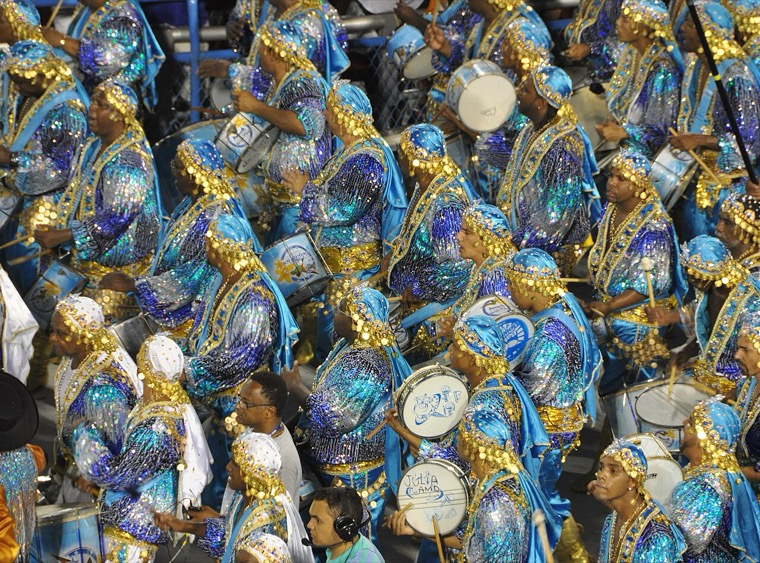
Rio Carnival is the largest carnival on earth, and its centre is the Sambadrome, formally the Passarela Professor Darcy Ribeiro, a 700-metre parade avenue in the Cidade Nova district built for exactly this purpose. Across the final weekend before Lent, the twelve samba schools of the Grupo Especial each parade for around 75 minutes with thousands of costumed members and a sequence of floats, judged on everything from the drum section to the harmony of the front commission. Away from the stadium, several hundred blocos, the free street parties, fill Ipanema, Santa Teresa and the Centro.
It belongs on the list because the samba schools are neighbourhood institutions that rehearse for a year, and the parade is the night that year is judged, which gives the Sambadrome an intensity no ticketed show has. The 2027 edition runs from Friday 5 to Tuesday 9 February, with the Grupo Especial parading on the Sunday and Monday nights and the Champions Parade on Saturday 13 February.
The practical fact is that the Sambadrome sells by sector, and the sector decides your night. In our experience the grandstands nearest the halfway point give the best view of the floats, the allocated chairs put you closest to the drummers, and the frisas, the small boxes at track level, are what regulars buy. Hotels in Copacabana and Ipanema fill six months ahead, and our Rio Carnival listing links to the official ticketing when it opens.
2. Holi, India
Holi is the Hindu spring festival of colour, held on the full moon of the month of Phalguna and celebrated across northern India with a bonfire the evening before, called Holika Dahan, and a morning of thrown coloured powder and water the next day. In the Braj region around Mathura and Vrindavan the celebrations run for over a week beforehand, with the Lathmar Holi of Barsana and Nandgaon the most photographed.
It belongs here because it is the one festival on this list where the visitor cannot stand and watch. You are a participant from the moment you step out of the door, and in our experience the first hour in the lanes of Vrindavan or the old city of Jaipur is as close to total immersion in another culture as travel offers.
The practical fact is that the date moves with the lunar calendar, and different panchangs can place it a day apart. For 2027 the panchangs we checked put Rangwali Holi on 22 or 23 March depending on the local sunrise reading, so confirm the date for the specific town with a hotel or temple before you book. Wear clothes you will throw away, seal cameras in a bag, and read our Holi listing for the regional variations.
3. Día de Muertos, Oaxaca, Mexico
Día de Muertos is the Mexican tradition of welcoming the dead back for a night, and Oaxaca is where it remains most rooted in family and village practice rather than performance. Homes and businesses build ofrendas, altars layered with marigolds, candles, sugar skulls and photographs of the departed, and on the nights of 31 October, 1 November and 2 November families sit in the cemeteries beside the decorated graves while comparsas, the costumed processions with brass bands, move from village to village until dawn.
It earns its place because it is simultaneously a public spectacle and a private act of mourning, and Oaxaca manages both without letting one destroy the other. The cemetery vigil at Xoxocotlán on the night of 31 October and the comparsa at San Agustín Etla on 1 November are the two events we would not miss, and the cemetery at San Felipe del Agua on 2 November is a quieter version close to the centre. Ask before photographing a family at a grave.
The practical fact is that hotels in the historic centre, Jalatlaco and Xochimilco book out months ahead, and the dates never move, so there is no reason to leave it late. Arrive by 29 October to see the altars being built. Our Día de Muertos listing has the cemetery and village schedule.
4. Oktoberfest, Munich, Germany
Oktoberfest is the largest beer festival in the world and, more to the point, a 200-year-old Bavarian folk fair that happens to serve beer. It takes place on the Theresienwiese, a 42-hectare field a short walk from Munich's main station, in almost 40 tents. The Munich tourist board puts beer consumption at around 7.5 million litres a year and the workforce at 13,000 people.
It belongs on the list because the scale is matched by ritual. The Wiesn opens at noon on the first Saturday when the Mayor of Munich taps the first keg in the Schottenhamel tent and the costume and riflemen's parade follows on the Sunday morning.
The practical fact is the date. The 191st Oktoberfest runs from 19 September to 4 October 2026, and the 2027 edition from 18 September to 3 October 2027. Tents do not sell entry tickets, but table reservations for evenings and weekends are taken by each tent from the spring and go within days, so the reliable approach is to arrive on a weekday before noon and take an unreserved seat. Our Oktoberfest listing links to each tent's reservation page, and the bag-size rules are covered in our festival packing list.
5. Glastonbury Festival, England
Glastonbury Festival of Contemporary Performing Arts is a five-day gathering on Worthy Farm in Pilton, Somerset, and the largest greenfield festival in the world. The Pyramid Stage carries the headliners, but the event runs to more than a hundred stages and areas, and around 200,000 people camp on site for the duration.
It earns its place for the culture it has built around itself, which no other music festival has matched. It is a temporary city with its own newspaper and a charitable purpose, and in our experience the reason people return for decades has less to do with the headliners than with the sense that the whole site is the show.
The practical fact is that tickets require registration before they go on sale, and demand outstrips supply many times over. For 2027 the festival runs from Wednesday 23 to Sunday 27 June, registration closes at 5pm BST on Friday 25 September 2026, coach packages go on sale at 6pm on Thursday 1 October and general admission at 9am on Sunday 4 October 2026, with a £100 deposit against a £408 ticket, according to the festival's ticket announcement. Register now, and read our Glastonbury listing for the resale dates if you miss out.
6. Gion Matsuri, Kyoto, Japan
Gion Matsuri is the festival of Yasaka Shrine and it occupies the whole of July in Kyoto, but the events that draw the world are the two float processions, the Yamaboko Junko, on 17 July and 24 July. The floats come in two types, the yama carried on shoulders and the hoko pulled on wooden wheels, and the largest hoko stand up to 25 metres tall and weigh up to 12 tonnes. The Japan National Tourism Organization dates it to 869.
It belongs on the list for the three evenings before each procession, the Yoiyama nights of 14 to 16 July and 21 to 23 July, when the streets around Shijo and Karasuma close to traffic, the floats stand lit with lanterns and the machiya townhouses open their front rooms to show family heirlooms. In our experience those nights are the festival and the processions are the formal conclusion. The turning of a 12-tonne hoko on wet bamboo slats at the Shijo-Kawaramachi corner is the moment every crowd waits for.
The practical fact is that the processions run along Oike-dori and the city sells paid seats. The Kyoto City Tourism Association lists general seats for the 2026 processions at 6,000 yen and front-row seats at 8,000 yen, sold online through Ticket Pia and at convenience stores. Kyoto hotels in mid-July are expensive and full, so book by March or stay in Osaka on the Hankyu line. Our Gion Matsuri listing has the full month's calendar.
7. Kumbh Mela, India
The Kumbh Mela is the largest gathering of people on earth, a Hindu pilgrimage in which tens of millions bathe in a sacred river on astrologically determined days. It rotates between Prayagraj, Haridwar, Nashik and Ujjain on a cycle set by the positions of Jupiter, the Sun and the Moon, so each city hosts roughly once every twelve years. The akharas, the monastic orders of sadhus, process to the river on the principal bathing days.
It earns its place because nothing anywhere compares in scale, age or devotion. A temporary city of tents, roads, hospitals and pontoon bridges is built on the riverbank for the duration, and for a visitor the experience is less a festival than a walk through a civilisation assembled for a few months. In our experience the days between bathing dates are for moving around, and the bathing days for standing still and watching the akharas pass.
The practical fact is the cycle, because you cannot simply turn up in a given year. The next edition is the Simhastha Kumbh at Nashik and Trimbakeshwar on the Godavari, which the Maharashtra government has scheduled to open with a flag hoisting at Ramkund in Panchavati on 31 October 2026, with the three Amrit Snan bathing days on 2 August, 31 August and 11 September 2027, as reported by the Deccan Chronicle. After Nashik the cycle moves to Ujjain, then Haridwar, then Prayagraj, so a traveller who misses 2027 waits for the next city rather than the next year. Book Nashik rooms by the end of 2026 and expect road closures across the city on the bathing days.
8. Venice Carnival, Italy
The Venice Carnival is the most elegant of the world's carnivals and the one with the deepest historical claim, its masks recorded from the thirteenth century and its modern revival dating from 1979. The programme runs from the water parade on the Grand Canal on the opening weekend through the Festa delle Marie, the Flight of the Angel from the campanile of St Mark's and a fortnight of masked balls in palazzi, ending on Shrove Tuesday in Piazza San Marco.
It belongs on the list because the city itself is the set. The masked figures posing in the fog on the Riva degli Schiavoni at dawn are, in our experience, real people who have spent months on their costumes and will hold a pose if you ask politely. The balls are ticketed and expensive; the parades and costume competitions in the Piazza are free.
The practical fact is that the dates follow Easter. The 2027 edition runs from 30 January to 9 February 2027, and the two weekends in that span are when the Piazza is fullest and the vaporetti slowest. Book a room on the main island by the previous autumn, choose the quieter sestieri of Cannaregio or Castello over San Marco, and treat the programme the city publishes each January as the schedule that overrides any other. It sits in our cultural category alongside the other carnivals of Europe.
9. Songkran, Thailand
Songkran is the Thai New Year, marked across the country on 13, 14 and 15 April, and it has grown from a Buddhist ritual of pouring scented water over the hands of elders and images of the Buddha into the largest water fight in the world. The ritual survives in the temples, where families build sand stupas and make merit in the morning, and the water fight fills the streets from mid-morning until dusk. UNESCO inscribed Songkran on its list of intangible cultural heritage in 2023.
It earns its place for the way a whole country stops for three days and turns a religious observance into national play. Chiang Mai is where we send people first, because the old city moat gives the water fight a natural arena and the Tha Phae Gate parade of the Phra Buddha Sihing image gives it a centre. Bangkok's Khao San Road and Silom are louder and wetter.
The practical fact is that the dates are fixed public holidays, so 13 to 15 April 2027 is settled, but the whole of Thailand travels home that week and domestic flights and trains sell out weeks ahead. Book transport by February, stay inside the old city in Chiang Mai so you can walk everywhere, and buy a waterproof phone pouch before you go. Roads are dangerous during Songkran, and we would not hire a scooter in those three days.
10. Albuquerque International Balloon Fiesta, New Mexico, USA
The Albuquerque International Balloon Fiesta is the largest hot-air balloon event in the world, held over nine days each October at Balloon Fiesta Park on the north edge of Albuquerque, at 4401 Alameda Boulevard NE. The signature event is the Mass Ascension, when more than 500 balloons lift from the field in two waves from around 7am, preceded by the Dawn Patrol, a handful of balloons launching in the dark to test the winds. Evening Balloon Glows, with the tethered balloons firing their burners in unison, fill the rest of the programme.
It belongs on the list because the scale is physical and immediate. You walk among the balloons on the launch field as they inflate, the crews talk to you, and then five hundred of them rise around you against the Sandia Mountains in the first light. In our experience the cold at 5am is the only thing that spoils it for the unprepared, and the answer is a coat you would wear in December and a flask.
The practical fact is that the 2026 fiesta runs from 3 to 11 October, with Mass Ascensions on the Saturdays, Sundays and the middle Wednesday. General admission is sold per session on the fiesta's own site, the Park and Ride buses are the sane way in, and hotels along the North I-25 corridor and in Old Town book out by early summer. Keep a spare morning in case wind cancels a launch.
When should you go, and how do you plan a bucket list festivals trip?
Lay the ten out on a calendar and they cover the year. Venice and Rio come in late January and February, Holi in March, Songkran in April, Glastonbury in June, Gion Matsuri in July, the Kumbh bathing days in August and September, Oktoberfest in September and October, the Balloon Fiesta in October and Día de Muertos at the start of November. Holi and the Kumbh Mela move with the lunar calendar, and the Kumbh moves between cities, so those two need years rather than months of notice.
The pattern we have found across all ten bucket list festivals is that the festival itself is rarely the constraint. The constraint is a bed within walking distance on the two or three nights that matter, and the booking window for that bed runs from about six months for Munich and Albuquerque to a year for Oaxaca and Kyoto. Decide the festival, book the room, and only then buy the ticket, because the ticket is almost always easier to get than the room.
Finally, go for the edges as well as the centre. The Yoiyama nights before the Gion procession, the blocos before the Sambadrome and the altar-building before Día de Muertos are where these festivals show what they mean to the people who hold them, and visitors who fly in for the headline day never see them.
Explore the full Find a Festival directory. Every festival on this list has its own page with dates, venues and links to the organiser, and the Find a Festival calendar shows which of them, and which of the thousands of others, fall in the month you can travel.